
Being a mother is portrayed as something beautiful, rewarding, and full of meaning, and it is all of those things. But what’s not always discussed is the weight that comes with it sometimes.
At the end of some days, you go to bed exhausted, only to wake up the next morning still tired. Some days, the obstacles that face you seem more daunting than they once did. Some days, you snap due to motherhood stress, and the guilt that follows lingers for hours, or even days, afterwards. You love your children, but you’re tired, cranky, distant, or just not yourself anymore.
If that sounds like you, know that you’re not failing as a mother, and know that you’re not alone. You might be experiencing something called “mom burnout,” also known as “depleted mother syndrome.”
Depleted mother syndrome is not being tired after a long day, though that’s certainly part of it. Burnout is an exhaustion that’s more like an ache, an exhaustion that’s not just physical but also emotional and psychological, that comes when the demands of being a mother outlast your opportunity for rest and recovery.
You may not be getting the sleep, the break, or the energy you need because pushing through doesn’t give you more; it gives you less.
And the hardest part may be the guilt, the voice inside that tells you that you should be able to handle this, that good moms don’t feel like this, and that good moms should be able to handle this.
Burnout is not a failure, though, not by any stretch of the imagination. Burnout is your nervous system under stress, and that motherhood stress comes from needing to be strong for so long without any respite.
What Is Mom Burnout?
Have you ever gone to bed exhausted and woken up just as tired?
Have you ever snapped at your child over something small and then felt horrible about it?
Have you ever thought, “I love my kids so much… so why do I feel so drained?”
If yes, you’re not alone. And you’re not a bad mother.
You might be experiencing mom burnout, or some say it is depleted mother syndrome.
In simple terms, mom burnout is a state of deep physical, emotional, and mental exhaustion that happens when the constant demands of motherhood become heavier than your ability to cope — and rest alone doesn’t fix it.
It’s not just being tired after a long day. It’s feeling worn out in your bones. Which reflects parental fatigue.
It’s when sleep doesn’t recharge you. A break doesn’t reset you. And pushing through only makes you feel emptier.
Some people informally call it “depleted mother syndrome.” It’s not an official medical diagnosis, but the experience is very real.
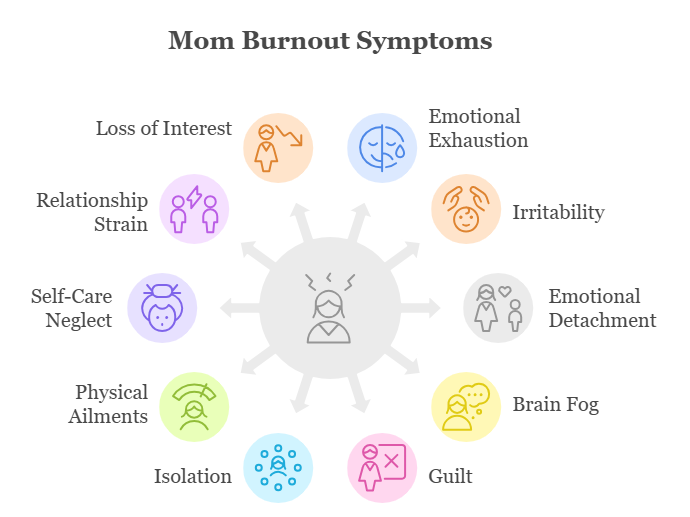
Mom Burnout Symptoms: How Mom Burnout Feels Like
Mom burnout doesn’t always look dramatic. Sometimes it’s quiet.
Mom burnout symptoms can feel like:
- Being constantly drained, even after sleeping
- Feeling overwhelmed by small, everyday tasks
- Being physically present but emotionally distant
- Snapping easily and then feeling guilty
- Feeling like you’re “on empty” all the time
You may start to feel numb. Or disconnected. Or like you’re just going through the motions of parenting instead of actually feeling present in it.
And then the guilt comes.
“I shouldn’t feel this way.”
“Good moms don’t get tired of this.”
“What’s wrong with me?”
Nothing is “wrong” with you. Your system is just overloaded.
Here’s where you can gently check in with yourself.
You might be dealing with mom burnout if you notice:
- Constant fatigue — no matter how much you sleep
- A short temper or “mom rage” over small things
- Feeling emotionally flat, hopeless, or detached
- Brain fog, forgetfulness, or trouble concentrating
- Crying more easily than usual
- Feeling like you’re doing everything, but it’s never enough
- A strong desire to escape or be alone — even though you deeply love your kids
Beyond exhaustion and irritability, mom burnout symptoms can show up in quieter but powerful ways.
- Feeling like a “bad mom,” even when you’re doing your best
- Constantly questioning your parenting choices is also a sign of stay at home mom burnout
- Intense guilt about not being “enough” or wanting time away
- Feeling isolated — even around family
- Thinking, “I don’t feel like myself anymore.”
- Persistent anxiety — stuck in “what if…” or “I should have…” thoughts
- Overthinking small mistakes for hours
- Feeling emotionally numb or detached
- Frequent headaches, body aches, or getting sick often
- Trouble sleeping — or sleeping but still feeling exhausted
- Appetite changes (overeating, undereating, relying on caffeine)
- Skipping basic self-care like showers or grooming
- Struggling with everyday tasks that used to feel manageable
- Withdrawing emotionally from your kids — parenting feels robotic
- Snapping at your partner or feeling constant tension at home is also a sign of mom burnout symptoms
- Pulling away from friends or avoiding social plans
- Some mom burnout symptoms feel like losing interest in hobbies or personal goals
- Feeling like everything is “just another responsibility.”
- If several of these feel familiar, it’s not a sign that you’re failing.
These mom burnout symptoms indicate that you may be overwhelmed or feeling parental fatigue — and that your system needs support, not self-criticism.
One of the biggest stay at home mom burnout symptoms?
You don’t feel like yourself anymore.
You feel like you’re surviving motherhood instead of living it.
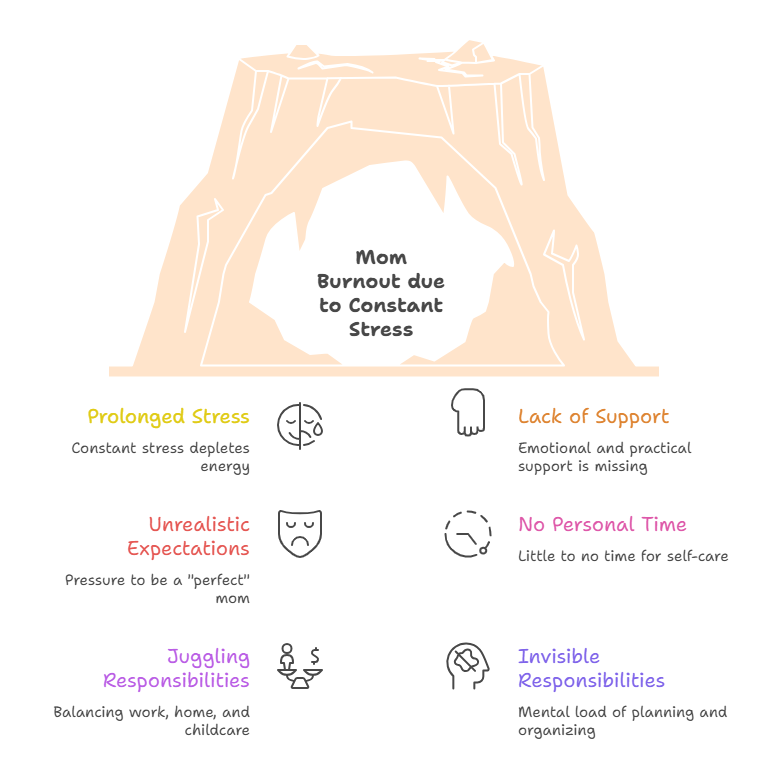
Why Does Depleted Mother Syndrome Happen?
Mom burnout or depleted mother syndrome happens because motherhood rarely stops.
There are no real off-hours.
Stay at home mom burnout usually develops when stress becomes constant, and recovery becomes rare.
It often happens due to:
Prolonged motherhood stress without enough relief
- Lack of emotional or practical support
- Unrealistic expectations about being a “perfect” mom
- Little to no time for yourself
- Juggling work, housework, childcare, and partner responsibilities
Many mothers carry invisible responsibilities — planning, remembering, organizing, anticipating needs. That mental load adds up.
When your nervous system stays in stress mode for too long, it eventually runs out of energy. Burnout is your body’s way of saying, “This is too much.”
If this sounds familiar, take a deep breath.
Mom’s burnout is not permanent.
It can improve with:
- Setting firmer boundaries
- Asking for specific, practical help
- Prioritizing small acts of self-care
- Allowing yourself real rest
- Talking to a therapist or doctor if needed
- By joining mom support groups or managing parental fatigue
You don’t need a full life overhaul.
Sometimes it starts with something small—20 minutes alone, saying “not today,” or admitting, “I’m overwhelmed.”
Depleted mother syndrome doesn’t mean you regret motherhood.
It means you’ve been strong for a long time without enough support.
And recognizing it?
That’s the first step back to yourself.
Why You Feel Guilty Even When You Shouldn’t
Mom guilt is strange. You can spend an entire day cooking, cleaning, helping with homework, answering questions, solving problems — and still go to bed thinking about the one moment you raised your voice. Somehow, the brain clings to that one “mistake” and ignores everything else. That’s because your mind links caregiving with responsibility at a very deep level. When you love someone intensely, especially your child, your brain treats every interaction like it carries enormous weight.
On top of that, modern culture quietly feeds impossible standards. A “good mom” is supposed to be endlessly patient, emotionally available, calm, organized, grateful, and completely child-centered at all times. It sounds beautiful — but it’s not human. When real life doesn’t match that fantasy, guilt steps in. Not because you’re failing, but because the standard itself is unrealistic.
Guilt also shows up quickly because it’s connected to care. In a way, it’s your brain saying, “This relationship matters.” So when you snap after a long day, feeling working mom burnout, need time alone, send your child to daycare, or ask someone else for help, your guilt alarm activates. It doesn’t mean you did something terrible. It means you care deeply and don’t want to harm the bond.
Sometimes the guilt feels bigger than the situation. That often happens when you hold yourself to perfection — expecting to never lose patience, never feel tired, never feel frustrated. When your internal standards are impossibly high, even normal human reactions feel like major failures. Add social media comparisons, comments from relatives, and memories of how you were raised, and suddenly, everyday parenting decisions feel loaded with pressure, and you feel parental fatigue at every step you take.
Another important piece is the difference between guilt and shame. Guilt says, “I handled that moment poorly.” Shame says, “I am a bad mother.” When guilt turns into shame, it becomes heavier and sticks around longer. It shifts from something you did to something you believe you are — and that’s where it becomes painful.
It’s also important to recognize when guilt isn’t actually valid. Resting, setting boundaries, using childcare, hiring help, mom support groups, or saying no to extra responsibilities are not selfish acts. They are responsible choices that protect your mental and physical health, whether you’re feeling working mom burnout or stay at home mom burnout. Even snapping under motherhood stress or feeling overwhelmed doesn’t mean you’re failing. It means you’re human and under pressure.
Mom guilt isn’t proof that you’re a bad mother. Most of the time, it’s proof that you care deeply — sometimes so deeply that you forget to extend compassion to yourself, which often results in motherhood stress, parental fatigue, and loss of motivation.
The Mental Load: The Work No One Sees
The mental load of motherhood is the invisible work that keeps the family running smoothly behind the scenes. It’s the planning, remembering, anticipating, and emotional managing that rarely gets acknowledged — but constantly drains your energy.
It’s not just what you do.
It’s what you’re always thinking about.
What Counts as Invisible Labor?
It includes the things no one assigns you — but somehow always land on you.
Remembering doctor appointments, school forms, vaccination dates, therapy sessions, and who needs what by when. Keeping track of documents, renewals, and schedules. Planning holidays, school breaks, and backup childcare when plans fall through.
Or do you remember meal preps, checking what’s running low, thinking ahead to next week’s groceries? Noticing when milk is almost over, when bills are due, when passwords need resetting, or when the house help is expected. Maintaining routines so the house feels stable and “normal.”
Sensing when your child is upset before they say it. Mediating sibling fights. Managing tension between family members. Remembering who’s stressed, who needs encouragement, and who needs space.
This emotional monitoring never really switches off.
Why It Feels So Draining
The mental load works like a background app running 24/7 in your brain.
Even on days when you “didn’t do much,” your mind has been:
- Thinking about tomorrow’s meals.
- Planning next month’s school event.
- Worrying about your child’s mood.
- Problem-solving future issues before they happen.
You’re mentally juggling timelines — today, tomorrow, next week — all at once.
And because this work is invisible, no one usually says, “I see how much you’re carrying.”
So instead of appreciation, you sometimes feel guilt. Or like you’re still not doing enough.
Over time, this constant unseen responsibility makes you feel over-responsible, under-supported, and emotionally exhausted — even if from the outside it looks like “everything is fine.”
Pause for a Moment
Think about three invisible things you handled this week that kept your family running.
Maybe you:
- Confirmed an appointment twice so it wouldn’t be missed
- Rearranged schedules when plans changed
- Stayed up thinking about how to support your child
That’s the mental load.
And seeing it clearly is the first step toward sharing it — instead of carrying working mom burnout alone.
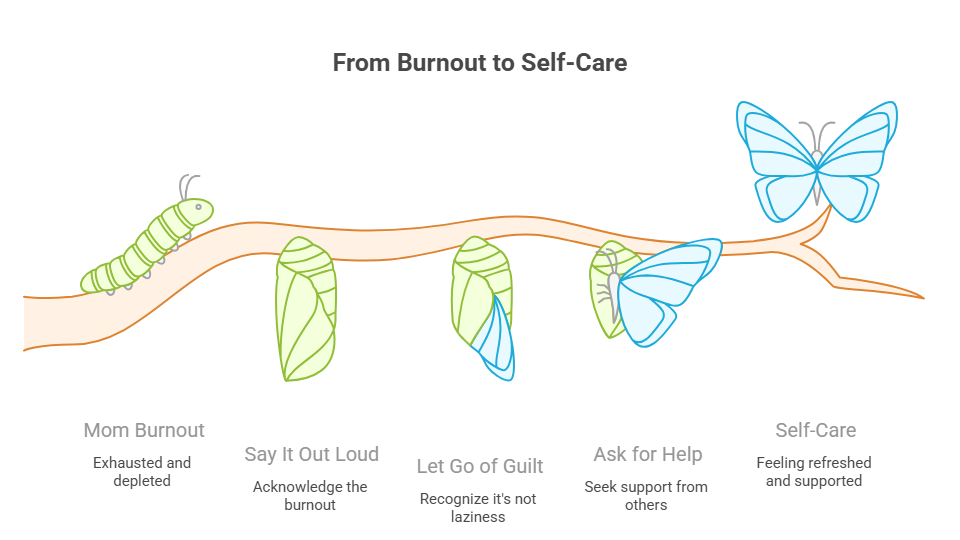
Recovering From Mom Burnout: How to Start Feeling Like Yourself Again
Feeling like yourself again after depleted mother syndrome doesn’t come from one huge thing. It comes from small, gentle movements that gradually bring you back in touch with your body, your mind, and your essence beyond “mom.” You don’t need a huge transformation. You need small, realistic steps that help you get back to yourself. Here’s a simple and realistic way to start:
Say It Out Loud
Sometimes the first step really is the strongest. Instead of struggling through in silence, say it out loud:
“I am in mom burnout.”
“I am exhausted on a deeper level.”
Depleted mother syndrome isn’t because you’re lazy. It’s because you’re caring for everyone else and haven’t been caring for yourself enough. Saying it out loud helps you let go of guilt and ask for help.
Protect 10 Minutes That Are Just Yours
You don’t have to have an hour. You just need ten minutes. That’s it. Schedule it and protect it like it’s a doctor’s appointment.
Use it to do absolutely nothing, listen to your favorite music, scroll through something that’s not related to mom stuff, stretch, or have a cup of tea. It doesn’t have to be anything significant. It just has to be something that reminds you that you exist outside of mom duties.
Set One Small Boundary
Not five. Not ten. One.
- Say no to one non-essential ask
- Stop one guilt-ridden activity
- Leave something less than perfect
- Tell people, “I’m not available for 30 minutes.”
Boundaries remind your brain that your energy is available to be used, not given away.
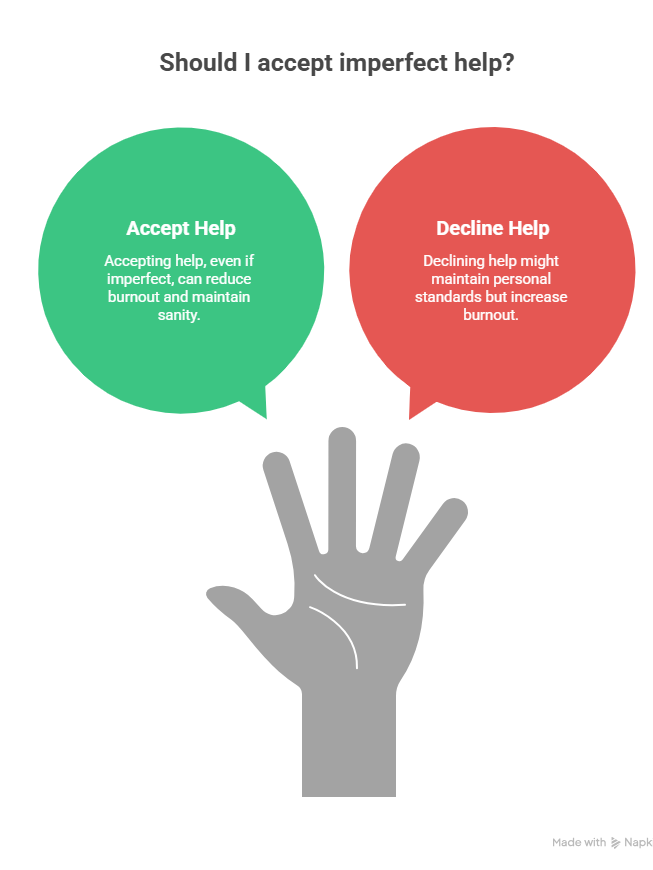
Accept Imperfect Help
If someone offers to help, say yes, even if they do it differently than you would.
- A different way of packing the lunch is still a packed lunch.
- A less efficient clean-up is still clean enough.
You don’t have to be the only capable adult in the room. Good enough helps keep your sanity.
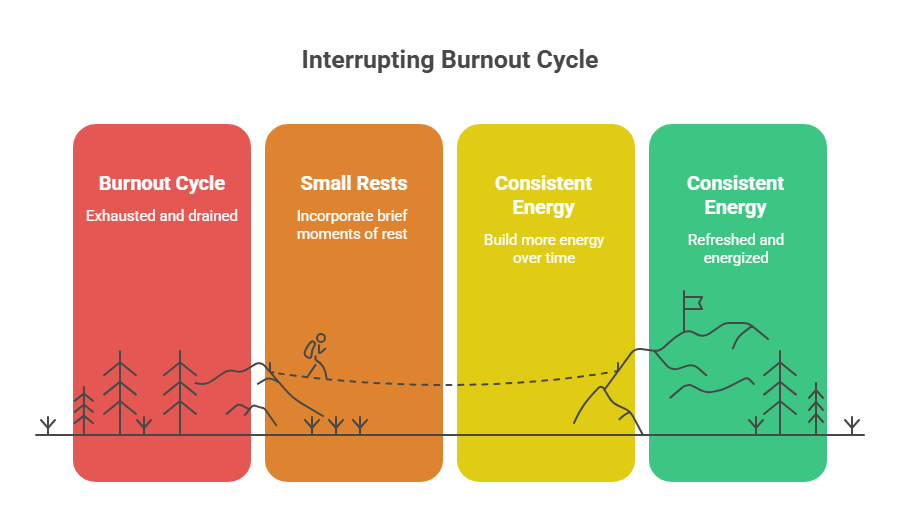
Rest in Small Ways
Rest isn’t a week-long vacation; it’s also:
- Lying down for 10 minutes
- Allowing the kids to watch something while sitting on the couch with them
- Going to bed 15 minutes earlier tonight
- Eating meals rather than skipping meals altogether
- Sitting down to fold the laundry
These small rests interrupt the burnout cycle and create more consistent energy levels over time.
Try This Now: A Mini Reset Exercise
Let’s do this together.
This is a short 3-minute reset to help you feel better if you’re about to snap, shut down, or check out. Nobody needs to know this is happening. It’s for your eyes only.
Deep Breathing (1 Minute)
Sit down somewhere – even if it’s on the bathroom floor.
- Breathe in slowly through your nose for 4 counts.
- Hold your breath for 1-2 seconds.
- Breathe out slowly through your mouth for 6 counts.
Do this for a minute. Don’t even think about fixing anything. Just breathe. Your nervous system will calm down.
Gentle Self-Affirmation (30 Seconds)
In your mind, say to yourself:
- I am doing the best I can.
- I am allowed to feel this way.
- This moment does not define my worth as a mom.
You don’t have to believe these words right now. Just let them land on your shoulders like a soft blanket.
Brief Visualization (1-2 Minutes)
Close your eyes and think of a place where you feel calm and relaxed.
It could be somewhere real or imaginary – like your own home, the beach, or the park bench in the evening.
Imagine yourself walking into this place.
The noise goes away. The pressure goes away. The to-do list goes away.
Gently tell yourself: “I can return to this feeling whenever I want to.”
Final Words — You’re Not Alone, and You’re Doing Enough
But before you scroll away, try something a little different.
Rather than judging yourself tonight, try writing yourself a note.
Not a list, not a performance review, just a note.
Write to yourself the way you would write to your closest friend, who is tired, struggling, and doing the best they can.
You could start like this:
I know you’re tired tonight. I see the weight you carry every day, every moment, even when no one else seems to notice.
I see the work behind every meal, every schedule, every ounce of patience, every moment when you wished you’d handled something differently.
You’re not failing, by the way. You’re tired. There’s a difference.
You don’t have to be perfect to be a good mother. You don’t have to love every moment of it to be a good mother, either. You don’t have to give your life away entirely to prove your worth as a mother.
It makes sense that you’re tired, that you need some sleep, that you crave some silence.
You’re doing enough, even on the days that feel like chaos.
You
You don’t have to write it like that, by the way. You simply have to write it.
Because sometimes the kindest words you’ll read tonight will be your own, your own kindness, your own understanding, your own acceptance.
And tonight, rather than asking yourself,
“Am I enough?”
Try asking yourself,
“What would change if I treated myself like someone I care about?”
You know, as well as anyone, that you’re worth the same kindness that you extend to everyone else.
If you’re feeling overwhelmed, this simple 7-day checklist can help you slow down, reduce mental load, and reconnect with yourself.
Conclusion
Depleted mother syndrome can feel lonely and burdensome, especially if you feel like you need to be a patient and thankful mom. Burnout does not mean your love has disappeared, your exhaustion does not mean you regret your decision to become a mom, and your need for space does not mean you are a selfish mom.
Burnout is a sign that you have shouldered the load for a long time without relief. Constantly planning, remembering, anticipating, and providing can drain your energy. When recovery is hard to come by, and the load never stops, your body and mind will eventually protest. It’s a sign that it’s time to stop and listen to your body, not a weakness.
And the best news? Burnout is reversible. It gets better when we receive support by joining mom support groups, establishing boundaries, getting more rest, and making incremental changes in our lives.
You don’t need a major life makeover to start healing. Sometimes all it takes is admitting that we are overwhelmed, asking for specific help, taking a few moments to rest, or talking to a professional if needed.
But the biggest piece of advice? You are not your burnout or depleted mother syndrome. Your worth as a mom has nothing to do with your current exhaustion. Your worth as a mom has nothing to do with your struggles. Your worth as a mom has nothing to do with your ability to provide and care for your children every day.
You are not behind, and you are not failing. You are human, and humans need help.
This is not the end of the story. It’s the beginning of the story.


Leave a comment