
Introduction
Imagine forgetting the place you know by heart, the faces you love, and the beautiful memories you’ve woven throughout your life. This is the reality of dementia syndrome. In this condition, you lose your memory, cognitive function, reasoning, and language, and may become unable to communicate verbally.
Dementia is not a single disease but a collection of symptoms that interfere with daily life, affecting memory, behavior, and thinking ability. Understanding the dementia stages, how it progresses, and the symptoms of dementia can help identify it early and manage it effectively.
It’s estimated that about 200,000 Americans have younger-onset dementia under the age of 65, and about 1 in 9 individuals aged 65+ are affected by dementia. Recognizing the early and final stages of dementia is vital for care and prevention.
In this article, we’ll explore what dementia syndrome is, the different types of dementia, stages of dementia, and how it differs from amnesia vs dementia, and practical ways to lower your risk and slow its progression.
Check out: How Body Doubling Works and the Top Body Doubling App to Get Started for tips on boosting focus and productivity.

What is Dementia Syndrome?
Dementia Syndrome is a term used when a person slowly loses thinking ability, language, memory, problem-solving skills, and even changes in behavior or mood. These problems become serious enough to affect daily life, such as managing finances, cooking, remembering people, or even dressing up.
As per the Alzheimer’s Association, about 7.2 million Americans age 65 and older are estimated to be living with Alzheimer’s dementia in 2025. Along with that, two-thirds of Americans with Alzheimer’s are women.
Amnesia vs Dementia
Many people confuse amnesia vs dementia, but they are different conditions. Amnesia usually refers to sudden or partial memory loss caused by brain injury or trauma and does not affect overall thinking or daily functioning.
In contrast, dementia is a progressive syndrome that affects memory, reasoning, language, behavior, and daily life over time. Understanding the difference helps with early diagnosis and proper care.
Characteristics and Cognitive Decline in Dementia
- Cognitive functions decline slowly, including loss of language, memory, problem-solving, judgment, and reasoning.
- When impairment is severe enough, it leads to a decline in independence in daily life.
- There is a change in personality and behavior, along with constant emotional problems.
What are the Symptoms of Dementia Syndrome?
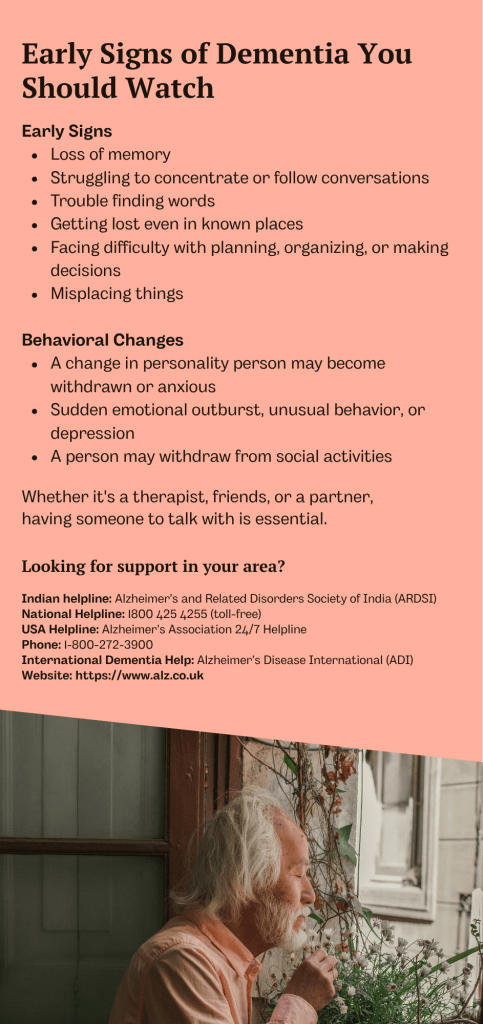
There are multiple symptoms of dementia, and they progress over time. The symptoms of dementia are grouped into early signs, mood and behavior changes, and the final stages of dementia:
Early Signs and Symptoms of Dementia Syndrome?
- Loss of memory
- Struggling to concentrate or follow conversations
- Trouble finding words
- Getting lost even in known places
- Facing difficulty with planning, organizing, or making decisions
- Misplacing things
Mood and Behavioral Changes in Dementia
- A change in personality may lead to withdrawal or anxiety.
- Sudden emotional outburst, unusual behavior, or depression
- A person may withdraw from social activities
Symptoms of the Final Stages of Dementia
- Acute memory loss
- Unable to communicate verbally
- Difficulty in walking or controlling movement
- Change in behavior, such as aggression, hallucination, agitation, or wandering
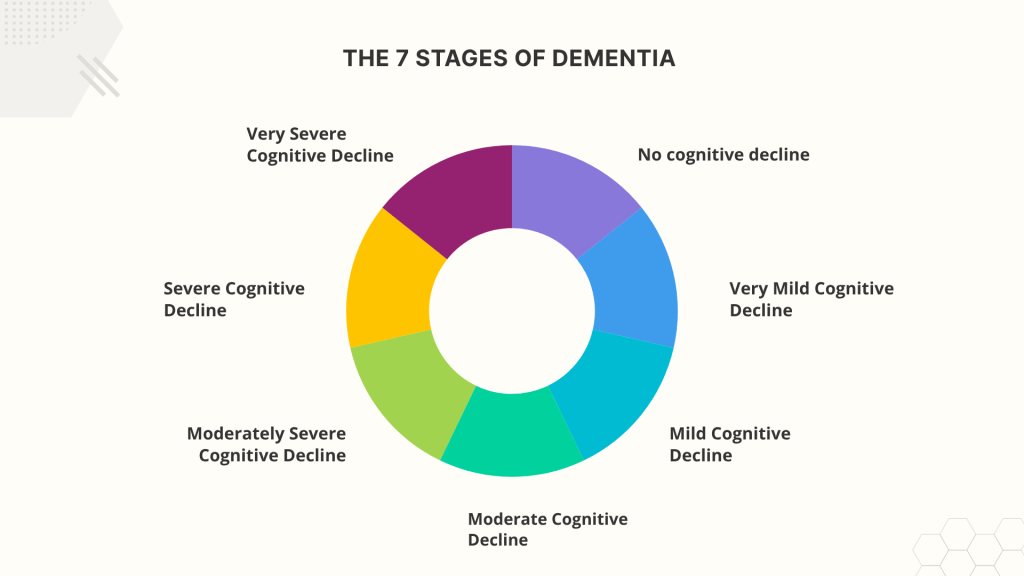
How long do the 7 stages of dementia last?
Here are the stages and duration of dementia syndrome, which will help you understand how long do the 7 stages of dementia last:
| Dementia stages | Average Duration | Characteristics |
| Stage 1: No Cognitive Decline | N/A (no impairment) | Normal function, no symptoms. |
| Stage 2: Very Mild Cognitive Decline | Unknown (can last years) | Age-related forgetfulness (names, misplacing objects)—not usually noticed by others. |
| Stage 3: Mild Cognitive Decline | 2–7 years | Noticeable increased forgetfulness, slight difficulty concentrating, and word-finding problems. |
| Stage 4: Moderate Cognitive Decline (Mild Dementia) | 2 years | Diagnosable dementia; clear memory loss, trouble managing finances, disorientation, and social withdrawal. |
| Stage 5: Moderately Severe Cognitive Decline | 1.5 years | Needs help with daily living (ADLs), major memory gaps, confusion about time/place; recognizes loved ones. |
| Stage 6: Severe Cognitive Decline | 2.5 years | Needs help with all ADLs, major memory loss (even for close family), incontinence, and personality changes. |
| Stage 7: Very Severe Cognitive Decline | 1.5–2.5 years | Loss of ability to communicate or walk, complete dependence, loss of motor skills. |
What are the Types and Causes of Dementia?
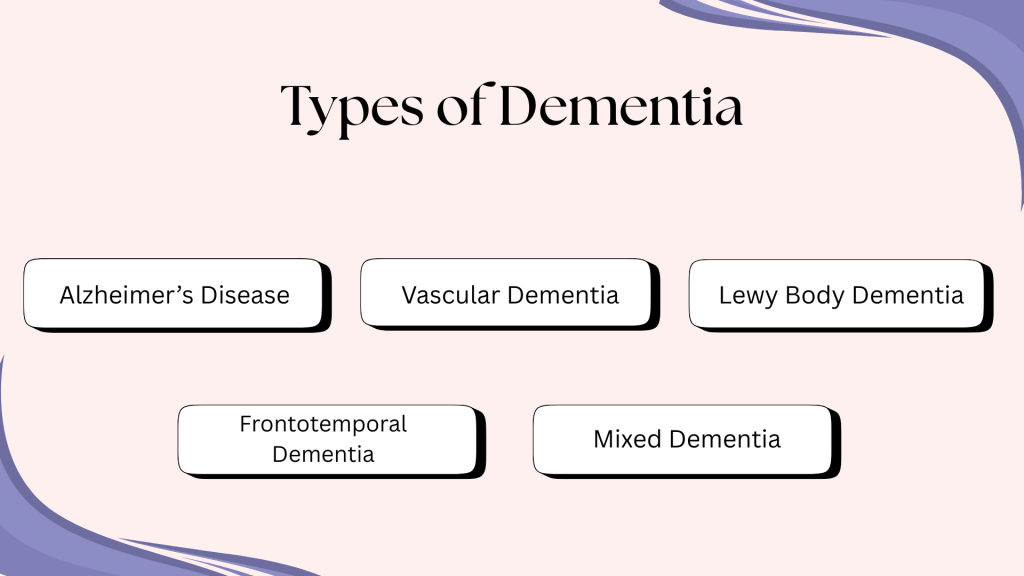
- Alzheimer’s Disease: Alzheimer’s Disease is the cause of 60-70% of dementia cases. It is connected to protein buildup in the brain, which leads to confusion, memory loss, and trouble with reasoning.
- Vascular Dementia: Vascular dementia is caused by reduced blood flow to the brain, usually due to strokes or vascular disease.
- Lewy Body Dementia: Lewy Body Dementia is caused by the abnormal deposits of the protein alpha-synuclein. If you’re wondering, what type of dementia causes hallucinations? Then it is Lewy body dementia.
- Frontotemporal Dementia: This happens when the brain’s frontal and temporal lobes decay. People under 65 often face personality changes, language difficulties, inappropriate behavior, and movement problems.
- Mixed Dementia: It doesn’t happen due to one reason, but it is a combination of Alzheimer’s and vascular dementia, and the symptoms are a combination of types.
Other Causes and Risk Factors of Dementia
- Traumatic Brain Injuries
- Diseases such as Parkinson’s Disease or Huntington’s Disease.
- Chronic use of alcohol, infection, or brain tumors.
- Nutritional deficiencies or exposure to toxins.
Sudden Worsening of Dementia Symptoms
Sometimes, people experience a sudden worsening of dementia symptoms, such as confusion, agitation, or rapid memory decline. This can be triggered by infections (like UTIs), dehydration, medication changes, or medical complications. Always consult a doctor immediately if a sudden decline occurs.
How to Prevent the Risk of Dementia Syndrome
As per the Lancet Commission 2024, there are 14 things that we can change in our lives that affect the risk of dementia. Together, they account for almost 45% of dementia cases worldwide.
The latest update by the Lancet Commission added two new risks: untreated vision loss and high LDL cholesterol (“bad” cholesterol).
The 14 Modifiable Risk Factors
- Low education
- Hearing loss
- Hypertension (high blood pressure)
- Smoking
- Obesity
- Depression
- Physical inactivity
- Diabetes
- Excessive alcohol use
- Traumatic brain injury
- Air pollution
- Social isolation
- Untreated vision loss
- High LDL cholesterol

Lifestyle Strategies to Lower Dementia Risk
- Hearing aids: Using hearing aids to treat hearing loss slows the rate of cognitive decline and reduces the risk of dementia.
- Vision care: Cataract surgery and glasses are essential due to the untreated loss of vision.
Sensory Care
Ensuring that the individual receives regular screening and treatment for vision and hearing loss is essential. Sensory impairment can cause isolation and cognitive decline, which is why sensory care is a key to prevention.
Stay Active in All Ways
Regular physical activity, engaging in cognitive activities, and maintaining social connections are linked to a reduced risk of dementia.
As per recent research, the medication that has anticholinergic effects is most likely to increase dementia or worsen cognitive functioning.
On a related note, you might love The Soft Girl Era: Why Everyone’s Embracing Gentle Living
Strategies to Reduce the Risk of Dementia Syndrome
Here are some strategies to manage and tackle the risk of dementia:
- Manage your blood pressure, diabetes, and cholesterol.
- Avoid smoking and the use of alcohol.
- Eat a Mediterranean-style diet rich in fish, fruits, whole grains, vegetables, and healthy oils.
- Use hearing aids if advised and have regular eye exams.
- Monitor your blood pressure and cholesterol. Ensure that you engage in aerobic and strength-building exercises.
- Aim for at least 150 minutes of moderate exercise per week.
- Challenge your brain with learning, reading puzzles, and new hobbies.
- Stay actively involved in family, community, and group activities, and maintain contact with your loved ones and friends.
- Regularly check in with your healthcare provider and ensure that the medication doesn’t have anticholinergic effects, as they increase the dementia risk.
- Always seek mental health support whenever needed.
Conclusion
Dementia syndrome is not a single mental health condition, but a collection of disorders that affect memory, behavior, thinking, and daily functioning. Understanding the symptoms and stages of dementia, along with how to manage, reduce, or avoid the risk of dementia, is essential for early intervention and better care.
While dementia cannot always be prevented or cured, certain lifestyle changes and proper care can help slow down the progression of dementia stages and enhance overall quality of life.

Leave a comment