
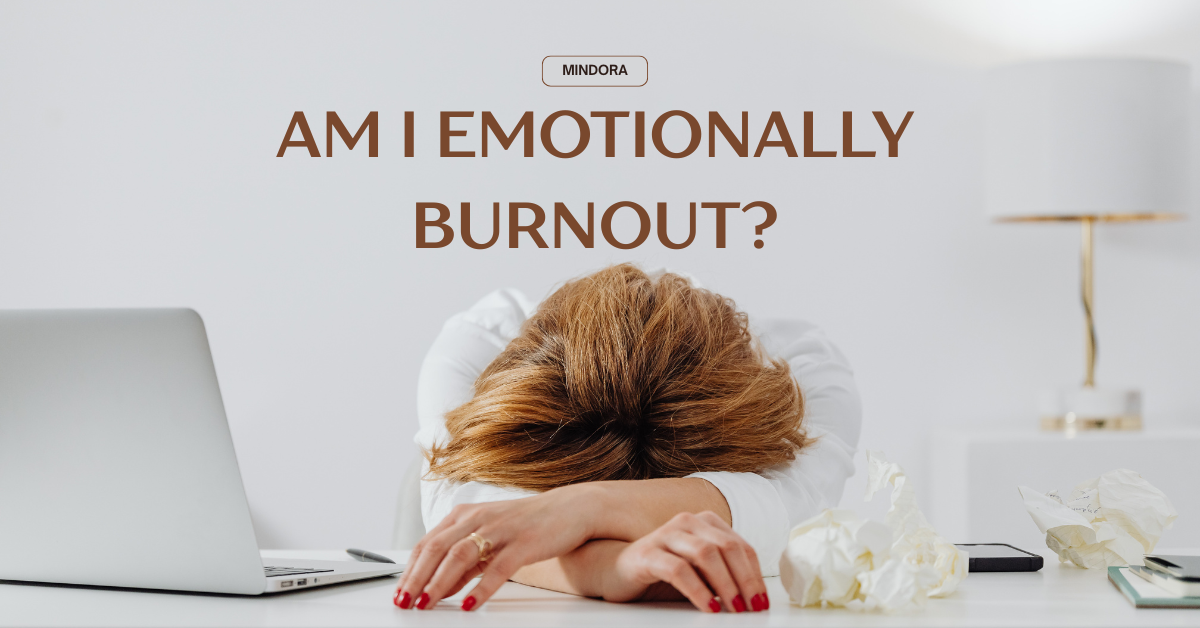
Do you wake up after a full night’s sleep but still feel drained? Even before the day begins, your mind feels heavy. Simple tasks become hard, and things you once enjoyed now feel dull and distant. You keep up with your responsibilities, but something feels off. You sense you’re running on empty, even if everything seems fine to others. These are signs and symptoms of burnout.
That’s the confusing part: you’re “resting,” so why aren’t you recharged? You might wonder what’s wrong, or if you’re just sad or depressed.
It’s not about sleep, it’s about emotional burnout. In a world where productivity is constantly expected, where work follows us everywhere through our phones, and where rest often feels like a luxury, understanding what burnout is and recognizing its early signs and symptoms can help you protect your mental and emotional energy before it reaches a breaking point.

What Is Emotional Burnout?
Have you ever felt so exhausted that even small tasks seem impossible? This is emotional burnout—ongoing exhaustion of the mind, body, and emotions.
Constant work stress, caregiving, and other emotional challenges can lead to burnout—especially when you lack time to rest. Motivation, focus, and emotional engagement decrease, and rest no longer refreshes you; instead, you remain overwhelmed and mentally exhausted. This cycle signals emotional burnout.
Burnout doesn’t happen suddenly; you may start feeling a little exhausted and stressed, but you don’t realize it until it becomes a bigger problem.

Why Emotional Burnout Is Rising Today
Emotional burnout is on the rise. Recent survey statistics (2025) show that 91% of workers felt high stress and mental exhaustion after work. What’s behind this increase?
Workplace Burnout Continues to Rise
For many, office workloads continue to grow, forcing people to juggle multiple roles at work and home.
Long hours, tight deadlines, and unpaid overtime are now commonplace, leading to emotional burnout after work.
Additionally, job insecurity fuels burnout. Economic uncertainty pressures people to prove their worth by working longer hours. Many industries face shortages for roles once handled by larger teams. The rise of AI accelerates change, with companies adapting, learning, and sometimes quickly laying off employees.
That Work Is Always with Us
While technology has made life easier, it also means we carry work everywhere. Emails, messages, smartphones, and video calls keep us always connected, even after hours.
AI tools have boosted productivity and heightened expectations for fast task completion, adding to workloads and increasing after-work pressure.
Post-Pandemic Work Scenario
The working environment has changed significantly since the COVID-19 pandemic. The hybrid model, while flexible, blurs the line between personal and professional life, allowing work to encroach on personal time. Returning to the office adds stress for employees. When roles, management, or recognition are unclear, employees become stressed and feel undervalued.
Life Outside Work Is Stressful Too
Burnout extends beyond work. Recently, stress from finances, sleep loss, caregiving, and social isolation has increased. Combined work and personal strain have heightened emotional exhaustion.
Hustle culture adds pressure to stay productive and chase achievements, which can lead to burnout over time.
Gender Differences in Burnout
Burnout affects people differently. Women experience more emotional exhaustion, possibly due to their “double shift” of job and home duties, such as childcare and domestic chores.
Women leaders face stereotypes and biases, increasing the risk of burnout over time. Men often become emotionally detached from work due to burnout and hesitate to discuss it openly.
Working women face high-stress jobs and family duties. Surveys show women report more stress than men.
Burnout is a complex issue influenced by evolving workplace demands, technology, societal expectations, and gender roles. Addressing burnout requires collective effort, organizational support, and societal awareness to create healthier work environments and improve overall well-being.
Why Emotional Burnout Feels Like Depression
Have you ever had one of those days where everything just feels like it’s weighing you down? Even simple things, like replying to a message, completing a project, or making a decision, seem to require tremendous energy.
If you have had one of those days, you might be experiencing emotional burnout. The bad part, though, is that emotional burnout can sometimes mimic depression, and this is why they are often confused with one another.
Why Burnout and Depression Are Often Confused
Burnout and depression have many similar symptoms, and this has caused them to be often confused with one another. This is because depression shares similar signs and symptoms of burnout, such as:
- You feel tired all the time, even after sleeping.
- Emotionally drained or empty
- Lacking the desire to participate in activities you normally have an interest in
- Feeling frustrated or annoyed by small things
- Having difficulty concentrating or thinking clearly
- Pulling away from activities and social situations
Both share similar signs, such as feeling tired even after sleeping, being emotionally drained or empty, losing interest in activities, feeling easily frustrated, having trouble concentrating, and withdrawing from activities or social situations.
How Burnout Gradually Saps Your Emotional Energy
Emotional burnout is a gradual process that develops slowly. Your emotional energy is like a battery that is depleted every time you take on a responsibility, meet a deadline, or experience constant stress.
Usually, you feel recharged after a good night’s sleep, but when stress never stops, the battery keeps draining.
At first, the signs and symptoms of burnout are minor, and you might feel:
- More tired than usual
- Extremely irritable than usual
- More are unable to concentrate than usual
When the Burden Becomes Overwhelming
Later on, the burden is heavier, and things seem too big to handle. You might find yourself wondering, “Why is everything so difficult?” or “I just don’t seem to have the energy anymore.”
This is because stress is always present, and it keeps your body in a constant state of alert, which can disrupt sleep, mood, and the brain chemicals that are supposed to help you feel motivated and in a good mood.
The Vicious Cycle of Burnout
It develops into a vicious cycle that goes like this:
- Stress causes a depletion in energy levels
- Everything is too big to handle
- Performance is suffering
- You feel guilty or frustrated
- Stress is now higher than ever
Before you know it, everything is just too big to handle.

What Are the Stages of Burnout
Burnout is a gradual process that goes through different stages of burnout, rather than suddenly appearing out of the blue. This is what stages of burnout actually look like:
- The Honeymoon Phase: You start something new, such as a job, project, or responsibility, and you are excited and highly motivated.
- Stress Begins to Build: Deadlines and responsibilities pile up, and you feel increasing pressure.
- Chronic Stress: You feel tired and irritable, and you can’t concentrate.
- Emotional Exhaustion: You feel drained and exhausted. Your motivation level is down, and you may start withdrawing.
- Feeling Numb or Detached: Some people may notice emotional withdrawal from work or things they used to enjoy.
- Overwhelm: At this stage of burnout, life can feel overwhelming. Simple things can feel too hard.
When Burnout Reaches a Breaking Point
When burnout has gone on too long, it is not just an emotional state. It can start to impact physical and relational well-being.
Some common complaints of people experiencing are:
- Frequent headaches
- Poor sleep or insomnia
- Constant emotional and workplace fatigue
- Trouble making decisions
- Feeling disconnected from others
At this point, the mind and body are basically saying:
“I’ve been under pressure for too long.”
The good news is that emotional burnout isn’t permanent. Once the source of stress is addressed and proper rest and boundaries are established, people often begin to recover their energy and motivation.

Who Is at Risk for Emotional Burnout?
Have you ever asked yourself, “Why do I feel so tired all of the time?” Not just physically, but emotionally as well?
There are always flashing signs and symptoms of burnout. It can sneak up on you as you go about your life. And, of course, some of us are more prone to burnout just due to who we are.
So, let’s examine a few different scenarios. Do any of these sound even a little bit familiar?
Why are Signs and Symptoms of Burnout are common in Caregivers
Are you always giving to someone else? Are you constantly running around, taking care of someone else’s needs? Do you feel like you should always be doing more?
Many parents even feel selfish when they take time for themselves.
It’s no wonder that burnout can happen to parents. In fact, about 8-20% of parents experience parental burnout, especially in households with both parents working and young children who constantly need attention.
High-Achieving Professionals
Do you feel like you are constantly in a position of needing to prove yourself?
High-achieving professionals are often their own worst critics. They work longer hours, strive for perfection, and are constantly worried about making mistakes. These are all situations that can lead to burnout, as one’s sense of self-worth becomes tied to their professional success.
Healthcare professionals are a prime example of this. Doctors and medical residents are known for their long hours and stressful situations. In fact, about 51-80% of these professionals suffer from burnout.
Empathetic and Sensitive People
Are you an empathetic person? Do you feel others’ emotions strongly?
If so, you may be more prone to burnout. Empathetic people are naturally more sensitive to others. They are always ready with a listening ear, a comforting hug, and a willingness to do anything they can to help. But, as a result, their own emotional energy can start to run dry.
People in Toxic Environments
Sometimes burnout isn’t about grinding away at work—sometimes, burnout’s about being in the wrong environment.
If you’re in a toxic work environment or even a relationship, being emotionally stressed means that stress becomes your new best friend. Lack of support, nitpicking, conflict, or being undervalued can wear you down little by little. Before you know it, sleep problems, increasing anxiety, and even emotional burnout can set in.
Research also indicates that a non-supportive work environment can increase your risk of workplace burnout, and being on night shifts can increase that risk by as much as three times.
So, if you’re reading this and going, “hmm, that’s me…”
Don’t worry, you are not alone. Burnout often shows up for people who care, who put in effort, and who put a lot of themselves into others. Being aware of burnout, however, is the first step to protecting yourself before you burn out.

12 Hidden Signs and Symptoms of Burnout Most People Ignore
Emotional burnout does not come out of nowhere. It is the accumulation of a series of psychological changes that most people call “just stress.” However, over time, these psychological changes will reveal a larger problem. The brain and body will be unable to cope with the long-term effects of the stress. Here are the signs and symptoms of burnout you often ignore.
1. You Feel Emotionally Numb
Activities that used to make you happy no longer do. Talking to someone, a hobby, or an achievement no longer provides the same level of satisfaction it once did, due to stress. When you feel stressed, the level of a brain chemical that helps you feel pleasure goes down. Over time, your brain tries to save energy, which can lead to shutting off your emotions. Researchers describe this shutdown in the Maslach Burnout Inventory.
2. Small Tasks Feel Overwhelming
Replying to messages, cleaning the house, or even making a decision can now feel like a lot of work. According to the cognitive load theory, long-term stress can drain the brain. The prefrontal cortex is especially affected, as it controls the decision-making processes. When this area gets tired, small decisions can feel like a lot of work, leading to avoidance or procrastination.
3. You’re Always Tired–Even After Rest
Even after sleeping or taking a break, you still feel tired due to chronic stress, which increases stress hormone levels. As a result, your body struggles to enter deep sleep.
4. You Feel Detached from People
Your social interactions become tiring rather than comforting.
Psychologists call this phenomenon depersonalization. It’s a form of burnout in which emotional distance from others increases as a coping mechanism. The brain’s emotional centers, such as the empathy centers and mirror neurons, become overwhelmed. To avoid increasing tiredness, the brain resorts to emotional distancing.
5. Increased Irritability or Anger
One of the many signs of emotional burnout is becoming extremely irritated or angry by minor things.
When you are experiencing burnout, your brain’s limbic system, especially the amygdala, is constantly on high alert due to stress. Your reduced serotonin levels due to burnout make you extremely irritated or angry.
6. Brain Fog and Difficulty Focusing
You start to forget things or become unable to concentrate or complete tasks.
Long-term stress affects working memory and makes the prefrontal cortex less effective. That part of the brain controls focus and decision-making. Even small tasks can feel impossible.
7. You Feel Like You’re Just “Surviving.”
It’s as if your motivation has quietly slipped away, leaving you to drift through each day on autopilot. Burnout creeps in, quietly eroding your confidence and draining all sense of meaning from your actions.
This phenomenon results from burnout’s effects on your self-efficacy. Burnout affects your self-efficacy or your ability to find meaning in life.
8. Loss of Motivation
Even simple tasks can be hard to begin. Chronic stress affects the brain’s reward system, especially the part that controls dopamine.
This is caused by chronic stress’s effects on the brain’s reward system, especially the nucleus accumbens, which uses dopamine to generate motivation.
9. Excessive Anxiety or Overthinking
You find yourself overthinking the same things, conversations, or worst-case scenarios. Chronic stress overactivates the brain’s default mode network, which handles all those internal thoughts.
10. Feeling Unappreciated or Invisible
You feel like the emotional energy you invest in relationships, work, or parenting is not being acknowledged.
Equity theory posits that people seek balance between the level of investment and the level of return in relationships. When this balance is not acknowledged, resentment may occur, especially the feeling of being invisible.
11. Difficulty Sleeping
You may find it difficult to fall asleep, even when you feel extremely tired. Some people may sleep more but still feel extremely tired.
Stress hormones, particularly cortisol, interfere with melatonin production and disrupt the natural sleep cycle, thereby impeding the body’s ability to achieve restorative rest. They prevent the body from getting the restful sleep it needs.
12. You Fantasize About Escaping
You may fantasize about leaving work, going away for a while, or escaping all responsibilities. But why? The brain uses its escape response to help reduce intense mental and emotional stress.
A Simple Exercise That Reduces Burnout Signs and Symptoms of Burnout
Wondering what you can do to break this cycle. One technique that psychologists have found to help people overcome stress and emotional fatigue is Cognitive Behavioral Journaling (CBT-J).
It’s a self-guided, reflective practice that helps you apply the core principles of Cognitive Behavioral Therapy, a therapeutic approach that helps you identify negative behaviors and thoughts.
By writing daily, you can pinpoint your thoughts, recognize the challenges you face, and begin to reframe unhelpful and negative thought patterns that cause emotional distress.
This reflective writing practice is particularly useful when we experience burnout. Burnout often results from our brain becoming stuck in patterns of automatic negative thoughts (ANTs), which are quick, negative judgments about situations. As psychologists Albert Ellis and Raymond DiGiuseppe note in their classic CBT textbook, ANTs are automatic, negative, and uncontrollable thoughts—typically a fast, judgmental evaluation of people, situations, or events. For example, these thoughts might include:
- Catastrophizing: “Everything I do is a failure.”
- All-or-nothing thinking: “If I’m not perfect, I’m worthless.”
Getting caught up in these thoughts and emotions can create a cycle of stress that keeps us feeling tense. Fortunately, CBT journaling offers a way to break this cycle by letting us write down our thoughts and evaluate whether they are truly accurate.
If applying this approach sounds confusing at first, don’t worry—many people feel that way. To help you get started, please download the worksheet below.

Download the CBT Journaling Worksheet for free below.
Conclusion
Emotional burnout is more common than people think. In a world that demands constant productivity and emotional presence, many push on without realizing how drained they’ve become.
If these signs of burnout are familiar, it doesn’t mean something is wrong. Your mind and body may have simply carried too much stress for too long.
Burnout often happens to those who care deeply, work hard, and give a lot to others. You are not alone. Emotional exhaustion isn’t permanent. Addressing stress and recognizing your emotional needs lets you regain energy, clarity, and motivation.
If you recognize these symptoms, take a moment now to acknowledge what you’re experiencing and allow yourself permission to slow down. Look for the practical strategies in the next guide to help you recover from emotional burnout and rebuild your energy, one step at a time.
Leave a Reply